$$PLAIN_TEXT_PREVIEW$$
NEWVEC

New England Center of Excellence in Vector-borne Diseases


EDITION 02: June 2025

What's new at NEWVEC?

A unique community update for those interested in vector-borne diseases in New England.

 
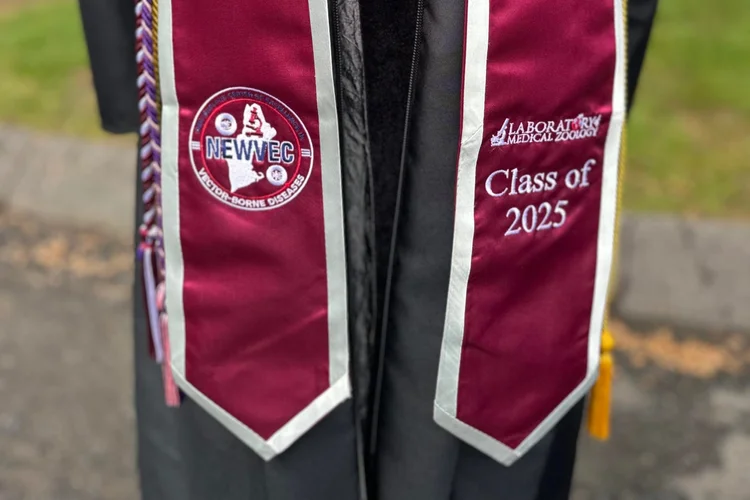
A close up of a graduate in black robes and her stole in UMass colors with the NEWVEC logo on one side, Laboratory of Medical Zoology logo on the other side, and "Class of 2025" below it.

Congratulations to all those who graduated last month!


NEWVEC-supported thesis research celebrated at Western Connecticut State University

Sophia stands in front of a poster of her work. She is wearing a black blazer and name tag.

Western Connecticut State University (WCSU) masters student Sophia Chiaia presented some of her NEWVEC-supported thesis research at WCSU’s student research symposium, Western Research Day, on May 9, 2025. Sophia won a first place Provost’s Award for outstanding student research. She has been conducting lab assays and field studies to evaluate the impact of cedar wood oil-based minimum risk natural products for residential tick control under NEWVEC co-investigator Neeta Connally.


It’s spring in New England…

Twelve ticks are shown with a hand in the background to show realistic sizes for three species at each of the four life stages.

…and you know what that means: nymphs. They’re hard to notice because they’re so small, about the size of a poppy seed! Don’t forget to check carefully for ticks and use repellents that contain DEET or permethrin. Learn how HERE.

Use the image on the left to compare ticks you find. Ticks with the highest likelihood of transmitting Lyme disease are circled. Adult females are on the far left, then adult males, nymphs, and larvae are on the far right.

Have you found any ticks this year? Tell us about it at the link below.

 Fill out our survey here. 
 

Summer Academy

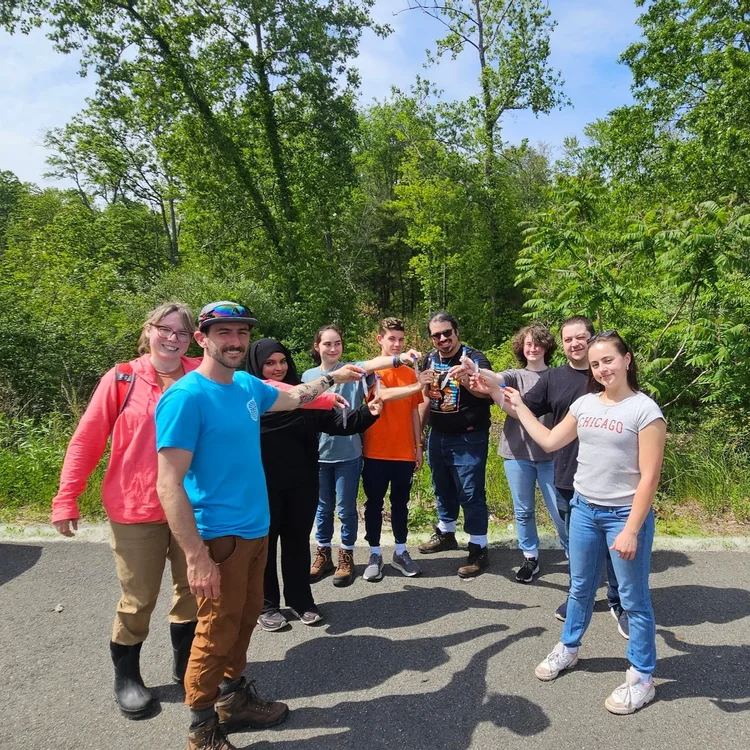
NEWVEC’s first Summer Academy, a training opportunity for college students, was a huge success. Nine students enrolled from four Massachusetts colleges. They spent three days learning about vectors and vector-borne diseases in the field and in the lab. Updates are coming to the Summer Academy page soon. Stay tuned!

Nine adult students stand in a semi circle holding the tubes of ticks they just collected.

“I loved learning [tick and mosquito] identification and qPCR! Everything opened my eyes regarding these insects (and arachnids) and I’m so happy that I participated.” Karlie Moriarty, Holyoke Community College

“I wasn’t expecting to end this training being so excited about this field!” Renée Hill, Holyoke Community College


Did you miss us?

Dr. Rich, Executive Director of NEWVEC, presented “Ticks and Tick-borne Diseases: Separating Fact from Fiction” at the Hitchcock Center for the Environment in mid May. Watch the recording HERE, and stay til the end to hear questions and answers.

Can NEWVEC help you and your community stay aware of trends in vector-borne diseases this year? Arrange a community tick safety presentation with us!

Dr. Rich holds a tick up to his face with fine-tipped forceps.
 

Is Tick Control Helping? Follow Project ITCH to find out.

NEWVEC staff and volunteers collect ticks from residential properties as year three of Project ITCH gets underway in all five New England states.

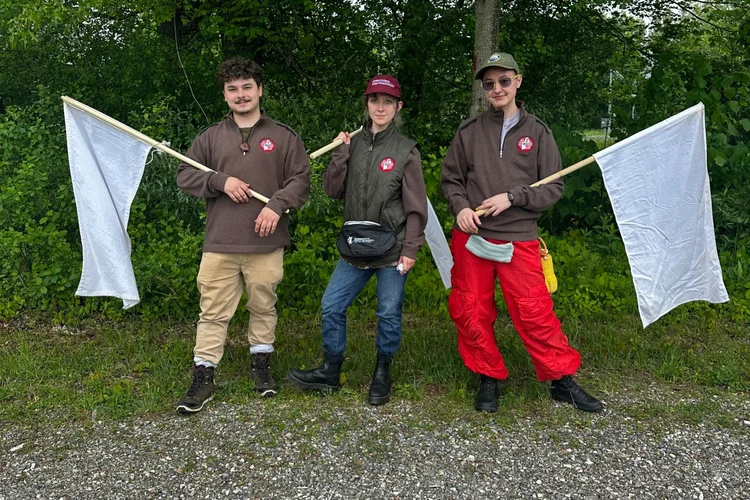
Nolan, Jackie, and Billi (UMass masters students and PhD student, respectively), pose for a photo while out flagging for ticks in Western Mass.

Three people hold white flags and pose side-by-side wearing NEWVEC-branded quarter-zips. 

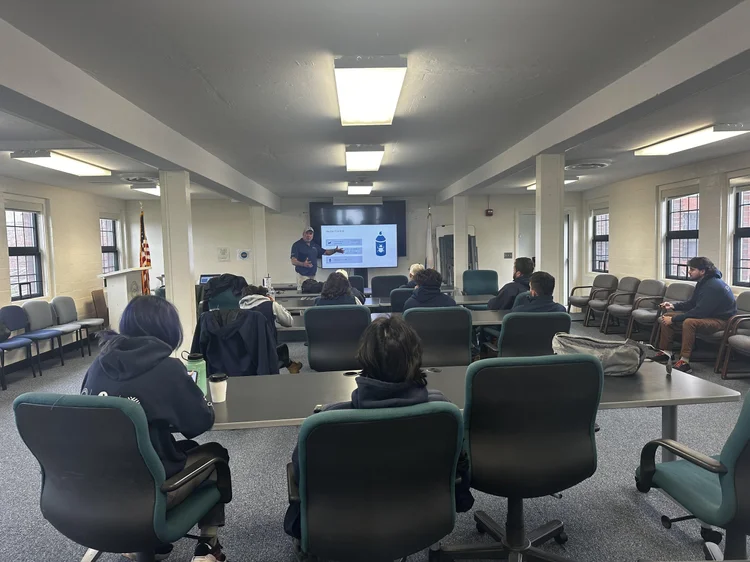
Dr. Rich gives a presentation to Americorps members at a projector screen in a mostly empty room.

A volunteer bends down to carefully inspect a flag for tick.

On Cape Cod, Dr. Rich gives a presentation to Americorps members about ticks, tick-borne disease, and Project ITCH. Members were then brought outside, given a demonstration on how to flag, and practiced for themselves. 

An Americorps member in Barnstable, MA, carefully inspects the flag to see if they picked up any ticks.

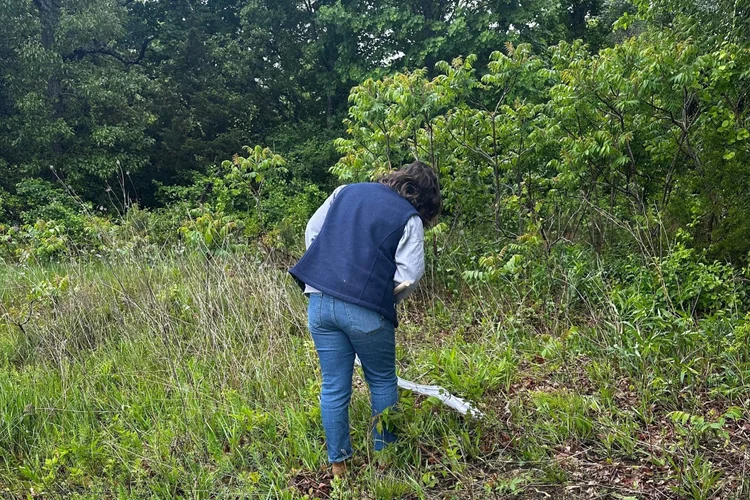
An Americorps member flags the area of a property in Barnstable, MA, where the yard meets the woods, trying to collect questing ticks. 


Work-in-Progress (WIP)

In May, Dr. Patrick Pearson from the New England Center of Excellence in Vector-borne Diseases presented “Project White Tail” and Dr. Andrea Gloria-Soria from the Connecticut Agricultural Experiment Station presented “Mosquito Genomics for Vector Control.”

All work-in-progress meetings are on alternating Wednesdays at 11:00 am during the semester. On June 25th we’ll hear from our last speaker for the spring, Dr. Goudarz Molaei from the Connecticut Agricultural Experiment Station. Dr. Molaei will present “The Rising Tide of Tick- and Mosquito-borne Illnesses and Our Research and Surveillance Engagement to Mitigate the Impacts".

You can join any future work-in-progress discussions by following the link below.

 WIP 
 

Read our blog for updates, opinions, and perspectives from students and experts across New England.

Tue, Jun 03

Is This Going to be a Bad Tick Year?

Written by NEWVEC Executive Director, Dr. Stephen Rich.

 Read More 
 

Do you know someone who would like to receive this newsletter? Send them to the link below!

 
 Subscribe to this Newsletter 
 
 Subscribe to our YouTube Channel! 
 

NEWVEC, 101 Fernald Hall, 270 Stockbridge Road, Amherst, MA, 01003, USA

NEWVEC

Unsubscribe