

Meet NEWVEC’s researchers from across New England.
Mosquitos and ticks are not constrained by state borders. Neither are we.
NEWVEC is proud to embrace a regional approach to vector control.

-
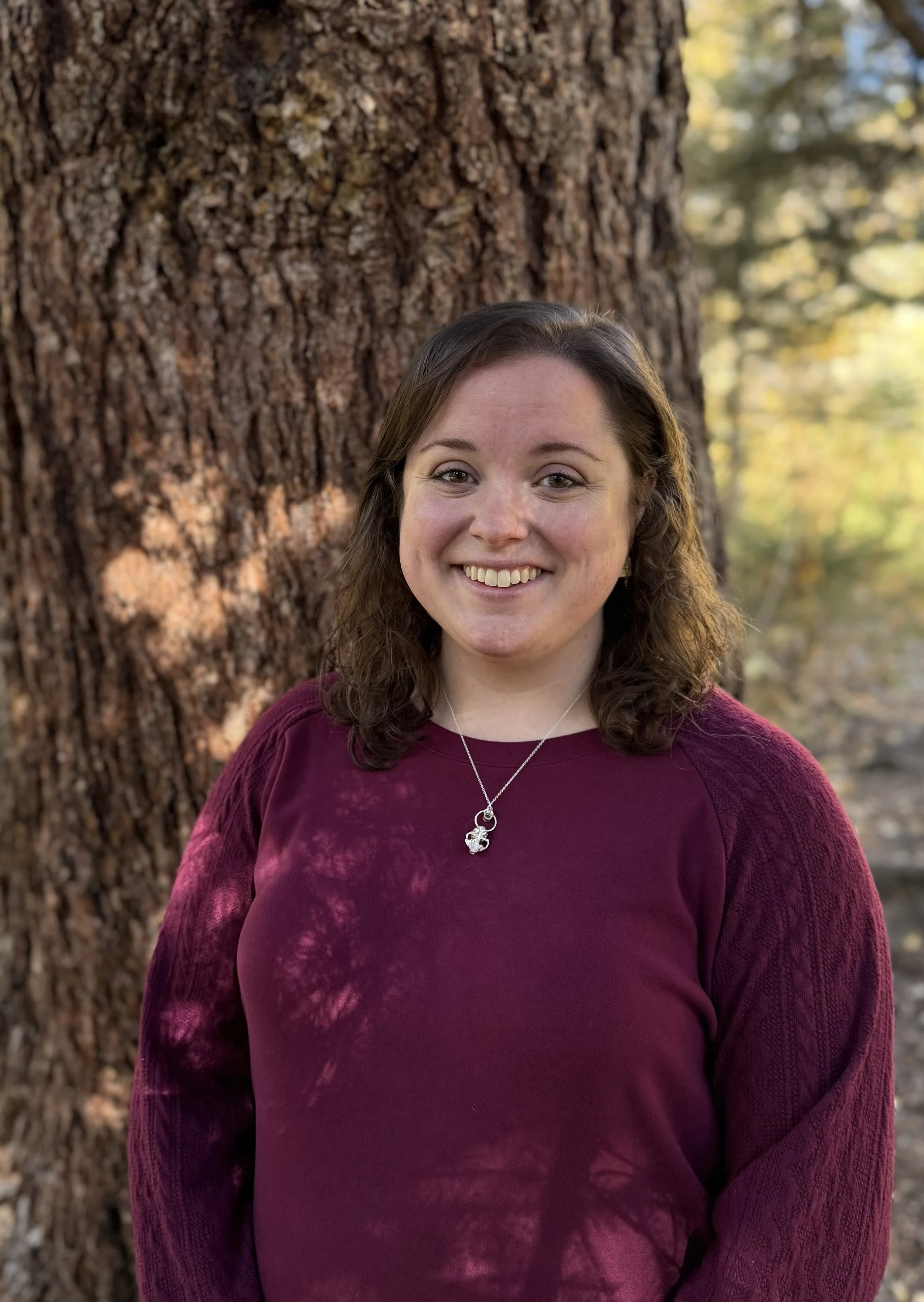
Alexis White (she/her), PhD
As a research associate IV at the University of Rhode Island’s Center for Vector-Borne Disease, Dr. Lexi White is a disease ecologist specializing in ticks and tick-borne disease systems. She completed her BS in Wildlife Biology at Unity College in Maine, PhD in Ecological Sciences and graduate certificate in Modeling & Simulation at Old Dominion University in Virginia, and has research experience in surveillance, educational outreach, spatial ecology, and mathematical modeling.
When not focusing on all things ticks, Dr. White enjoys gardening, gaming, and going to visit her family in Maine.
-

Allison Gardner (she/her), PhD
Allison Gardner, Ph.D., is an associate professor in the School of Biology and Ecology at the University of Maine. She completed her Ph.D. in Entomology, M.S. in Statistics, and M.S. in Veterinary Pathobiology at the University of Illinois Urbana-Champaign, M.S. in Behavioral Science at the London School of Economics, and B.A. at Williams College. The major focus of Dr. Gardner's research is the impacts of human behavior and decision-making on vector-borne pathogen transmission in natural resource economies. She has led multiple interdisciplinary projects investigating tick-borne disease ecology and management on private woodland and feedbacks between human mobility and mosquito-borne virus spread in the nature-based tourism industry. As a member of NEWVEC, Dr. Gardner also leads research on tick control in residential settings, integrating entomology, psychology, and economics. She has pursued her interest in the adoption of scientific research findings at the policy level as an Entomological Society of America Science Policy Fellow. At UMaine, Dr. Gardner regularly teaches undergraduate courses in General Entomology and Emerging Infectious Disease and a graduate level course sequence in Experimental Design.
-

Andrew Lover, MS, MPH, PhD
UMass Amherst Associate Professor of Epidemiology and Deputy Director of NEWVEC Andrew Lover is an infectious disease epidemiologist focusing on vector-borne diseases. His research encompasses public health surveillance, communicable disease control, and the human ecology of vector-borne disease.
In his free time, Andrew enjoys hiking and biking in Western Massachusetts with his family.
-

Guang Xu, PhD
Research Professor in the Microbiology Department at UMass Amherst Guang Xu is an entomologist specializing in ticks and tick-borne diseases. His current research focuses on identifying human-biting ticks in the US and conducting molecular surveys of emerging tick- and mosquito-borne pathogens impacting human health.
-

Jannelle Couret, PhD
Assistant Professor in the University of Rhode Island’s Department of Biological Sciences Nelle Couret is part of a broader mission to reduce the burden of vector-borne disease, she researches tick and mosquito vectors of human disease across ecological scales with applications for vector surveillance and control. She completed her PhD in population biology, ecology, and evolution of infectious disease at Emory University and earned a Master of Environmental Management at Duke University Nicholas School of the Environment.
When she isn't doing research and teaching, Nelle spends time outdoors with her family hiking, kayaking, or hanging out at the beach.
-

Jeff Garnas, PhD
University of New Hampshire Associate Professor
-

Neeta Pardanani Connally (she/her), PhD, MSPH
Western Connecticut State University Professor Neeta Pardanani Connally first collected a tick (on purpose) in 1998—she was immediately hooked. Her work since has focused on understanding risks for tick-borne illnesses like Lyme disease and preventing humans from encountering ticks, primarily in backyard landscapes. As a NEWVEC partner, Neeta evaluates the impacts of lawn mowing and the effectiveness of cedarwood oil for suppressing blacklegged ticks. Regional partnerships are integral to her work, and she commonly works directly with homeowners who live in high-risk areas throughout the region.
The WCSU Tick Lab is also home to Fran Tick, the 8-foot-tall tick mascot, who helps educate the public about tick bite prevention.
-

Patrick Pearson, PhD
Postdoctoral Research Associate for NEWVEC and the Microbiology Department at UMass Amherst Patrick Pearson is a microbiologist studying ticks and tick-borne pathogens. He is interested in translational approaches to controlling ticks and tick-borne diseases and routine surveillance of white-tailed deer and their ectoparasites. Patrick completed his BS at the University of Vermont and his PhD in Microbiology at UMass Amherst.
Outside of work he enjoys spending time outdoors and reading.
-

Stephen M. Rich, PhD
Executive Director of NEWVEC, Professor of Microbiology, and Head of the Laboratory of Medical Zoology, Stephen Rich grew up in upstate New York, went to graduate school in Vermont, Massachusetts, and California, but has spent most of his professional life in the state of Massachusetts. His formal education is in evolutionary genetics, but Stephen has always focused his research on agents and vectors of zoonotic disease.
In addition to leading NEWVEC, Stephen operates the Laboratory of Medical Zoology (LMZ), an academic research laboratory at UMass Amherst, which focuses on infectious diseases, specifically vector-borne zoonoses.
Incurably curious and always looking for new questions to ask, Stephen lives in Amherst with his wife, two children, and black Labrador retriever.
-

Tom Mather, PhD
Public Health Entomology Professor at the University of Rhode Island, Tom Mather, is also the Director of TickEncounter, which is part of the Rhode Island Cooperative Extension program. His research and outreach activities largely focus on tick bite prevention, tick control products and strategies, and tick-borne disease education.
These days, when Tom isn’t working, he keeps busy creating fun and tick-safe outdoor activities with his grandchildren.
-
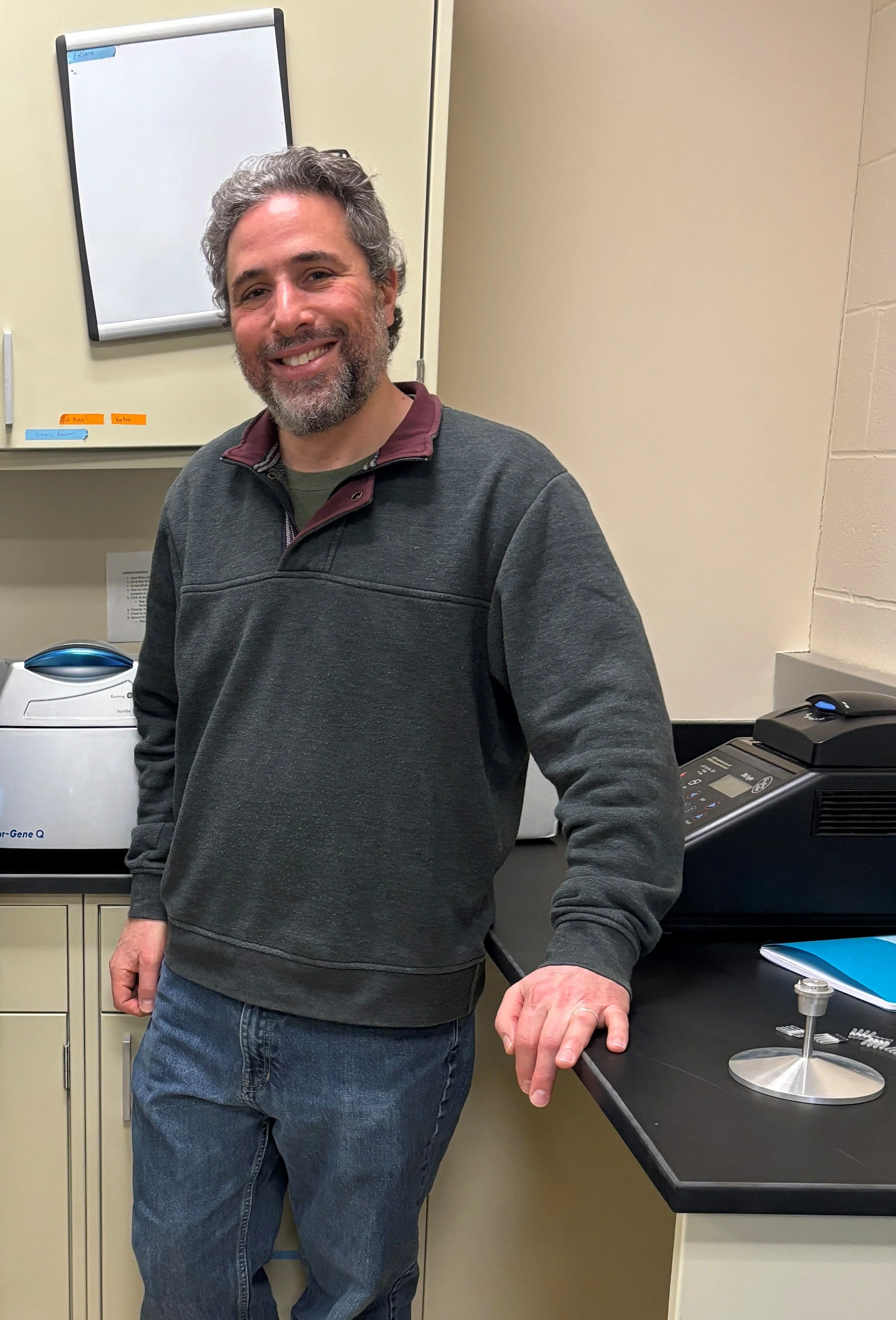
William Landesman, PhD
Vermont State University Associate Professor of Biology Bill Landesman is an ecologist using field and molecular techniques to understand the environmental and microbiological drivers of Lyme disease risk. In the laboratory, Bill uses high-throughput sequencing to study linkages between the tick microbiome and pathogen transmission, as well as to identify DNA remnants from blood meal feeding. In the field, he is exploring whether or not vegetation management leads to reductions in the risk of tick-borne diseases.

The New England Center of Excellence in Vector-borne Diseases was created to close gaps in knowledge and test evidence-based solutions for more effective control of ticks and mosquitoes in New England. Our portfolio of technical evaluative projects is organized around these four challenges.
Building more solid evidence of efficacy and effectiveness of products and applications used in places where humans frequent
Creating an evidence base for novel approaches and products that have promise against ticks
Measuring the effectiveness of various interventions and treatments aimed at habitats and hosts for vectors
Addressing the human factor: how individuals and public health practitioners can make informed decisions about reducing the burden of tick-borne disease