

Project Listen
Investigating the Experiences and Challenges of Public Health and Vector Control Professionals in New England
Vector-borne diseases have a large and growing public health impact across New England. In some states, responsibility for tracking vector populations rests on the shoulders of only a handful of dedicated individuals. Project Listen is a qualitative study that uses data from in-depth interviews with 67 professionals across all six New England states including field staff, agency leadership, and policymakers. Suggested action items and next steps focus on supporting interagency coordination and communication, which will ultimately boost regional collaboration.
About Project Listen
This study was a collaborative effort by researchers in the fields of epidemiology, health promotion and policy, and at the Center for Program Evaluation in the School of Public Health and Health Sciences at UMass Amherst. The goal was to explore how New England’s vector control and surveillance systems navigate communications, field operations, cross‑agency coordination, outreach to community members, and policymaking. Information was gathered using interviews and focus groups to understand professionals’ real-world experiences. Suggestions for practical next steps were collected and grouped by professional role to support regional communication and collaboration.
Project Listen Stakeholder Report

Click on the Stakeholder Report to download a PDF version.


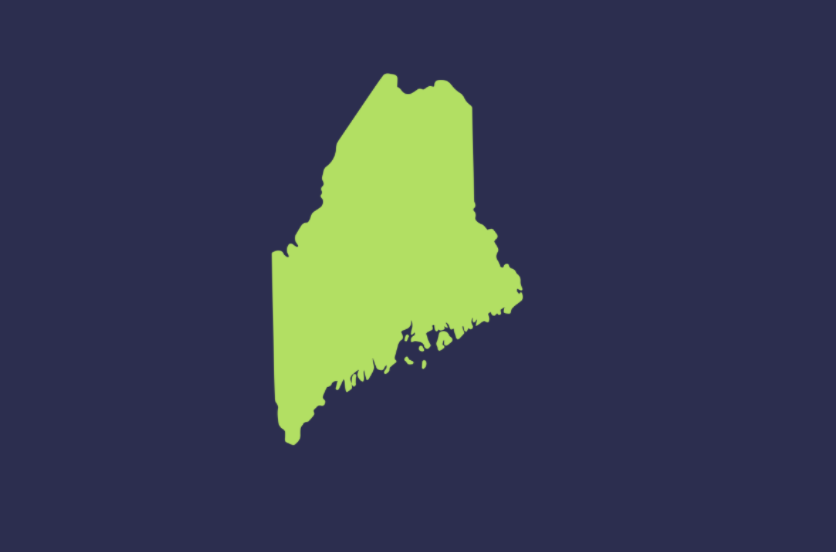
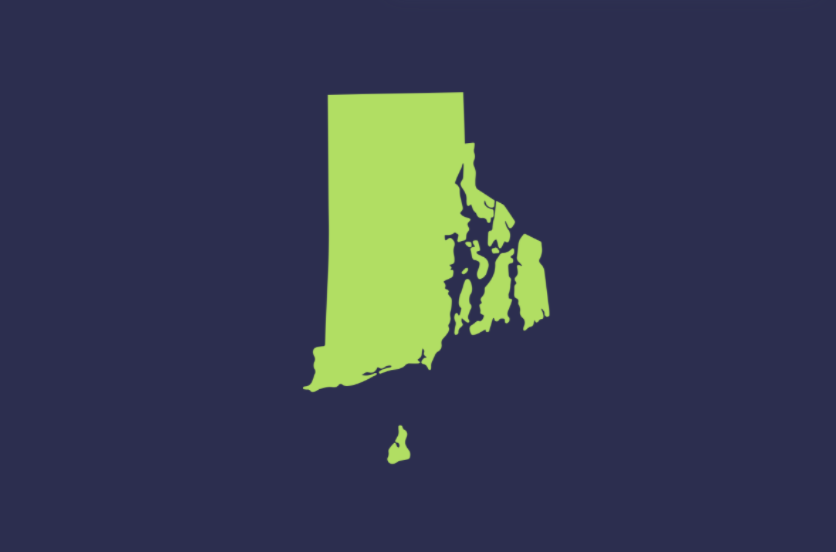
Explore the Vector Response Network Maps





Key Themes from the Field
The four themes listed below include some of the results, outlining the realities of vector control and surveillance across New England. Summaries and example quotes show both the strengths and challenges shared by participants.
-
“...we have a really good team of collaborators between our different agencies, with their different responsibilities [...] we've had a lot of conversations between the different agencies as to what works to, not only work together, but get the messaging out. So I think that's, I think that's the real, you know, the benefit of collaboration is that it makes all the bureaucracy a lot easier to get through.”
Regular, collaborative meetings across agencies lead to group decisions on strategies, shared learning, and coordinated responses.
Characterized by slow changes and competition, the political processes that shape vector control programs in New England require sustained advocacy
Networking with local experts facilitates more efficient use of resources and enhances communication
Facilitators: regular, collaborative meetings and seeking expertise from others
Barriers: Lack of free flow of information from boots-on-the-ground to state-level decision-makers or policymakers
-
“…It really goes back again to having real people talk, talking heads from government just doesn't really have an impact the way real people do. So if we can connect real people to the message, whether it's positive or negative or whatever it might be, it's really the best way to work on those challenging topics.”
Participants must walk a fine line between scientific, evidence-based interventions and public buy-in for their work
Public health messaging, even on basic topics, is often met with suspicion, fueled by social media echo chambers
Building trust is a continuous challenge, where field staff must act as trusted intermediaries with the public
Facilitators: Focus on “real people” sharing stories and distributing messages through their networks and one-on-one interactions to build trust
Barriers: Mistrust of government agencies and public health messaging and misunderstandings due to low levels of pesticide education among members of the general public
-
“I think, just having the flexibility to expand capacity to test when needed because factors governing mosquito control and diseases that they're bringing are shifting...”
Flexible, data-driven decisions include using real-time mosquito surveillance data to move traps to collect information in the highest risk areas
Plans must consider historical data, future restrictions on products containing PFAS, longer mosquito seasons, and the influence of shifting politics on funding
Agility is often limited by overstretched resources and overextended personnel
Private agencies operate with greater flexibility than public institutions, as public institutions must balance public and political pressures while navigating complicated regulations
Facilitators: Access to real-time surveillance data to inform decision making
Barriers: Political pressures and delays while navigating government regulations
-
“Yeah. I think for me, as a professional, what I need is less competition and more community collaboration like...I want a portal, a way we can go in and [find]...maps of the agencies. These are their expertise. What they do. Here's who you can contact and then...let's feed each other information.”
There is a desire to work together and share information, especially across state lines and with people with different perspectives on the problem
Regional collaborative planning and communication can improve resource use and reduce competition or border related constraints
Facilitators: Regional organizations and meetings such as the Northeastern Mosquito Control Association (NMCA)
Barriers: Competition within the private and academic sectors
Recommended Actions
These recommendations reflect what stakeholders shared during the study and point to priority steps each group might take to strengthen capacity, improve coordination, and build a more resilient regional response.
-
Train staff on communication and de-escalation to handle public interactions effectively.
Launch seasonal information campaigns to highlight year-round surveillance and control work.
Strengthen dialogue and coordination with colleagues across public health, water management, and pest control.
Build local networks with community partners (e.g., extension staff, school nurses, beekeepers, Lyme disease support groups).
Identify resource-sharing opportunities and establish agreements for emergency response support.

-
Provide communication training for frontline staff and expand public education, especially around pesticide literacy.
Collaborate across agencies through working groups with clear roles and data-driven decision-making.
Foster partnerships with extension professionals and local organizations to strengthen community ties.
Increase transparency around pesticide applications with proactive public engagement tools.
Connect policymakers to field and lab experiences to build understanding and inform decision-making.

-
Establish protocols for resource and data sharing (including confidentiality agreements as needed) to support timely, targeted responses.
Engage directly with field and lab staff to better understand operational realities.
Support communication infrastructure, including rapid-response outreach tools and social media capacity.
Encourage and fund pilot projects and partnerships with academic or private experts to build innovation.
Promote regional collaborations and cross-state working groups to pool expertise and resources
Building on these findings, NEWVEC will directly support regional progress by:
Offering support and resources for survey design, risk communication strategies, and facilitating trust-building and information sharing (i.e., workshops)
Share vector response network maps on the NEWVEC website
Present results at upcoming conferences and in peer-reviewed publications
NEWVEC’s commitment is to turn insights into action, address barriers, and help stakeholders adapt to evolving vector-borne disease challenges. Please stay connected for updates and new opportunities to engage.
Project Listen’s Team and Partners
Andrew Lover, PhD, MPH, MS—Associate Professor, Department of Biostatistics and Epidemiology, School of Public Health and Health Sciences, UMass Amherst
Sarah Goff, MD, PhD—Professor, Department of Health Promotion and Policy, School of Public Health and Health Sciences, UMass Amherst
Johanna Ravenhurst, MSPH—PhD Candidate in Epidemiology, Department of Biostatistics and Epidemiology, School of Public Health and Health Sciences, UMass Amherst
Ariel Scalise, MPH—Doctoral Research Assistant, UMass Amherst Center for Program Evaluation
Emilia Zaentz, BS—Research Fellow, UMass Amherst Center for Program Evaluation
Nora Finnerty, MPH—Evaluation Manager, UMass Amherst Center for Program Evaluation