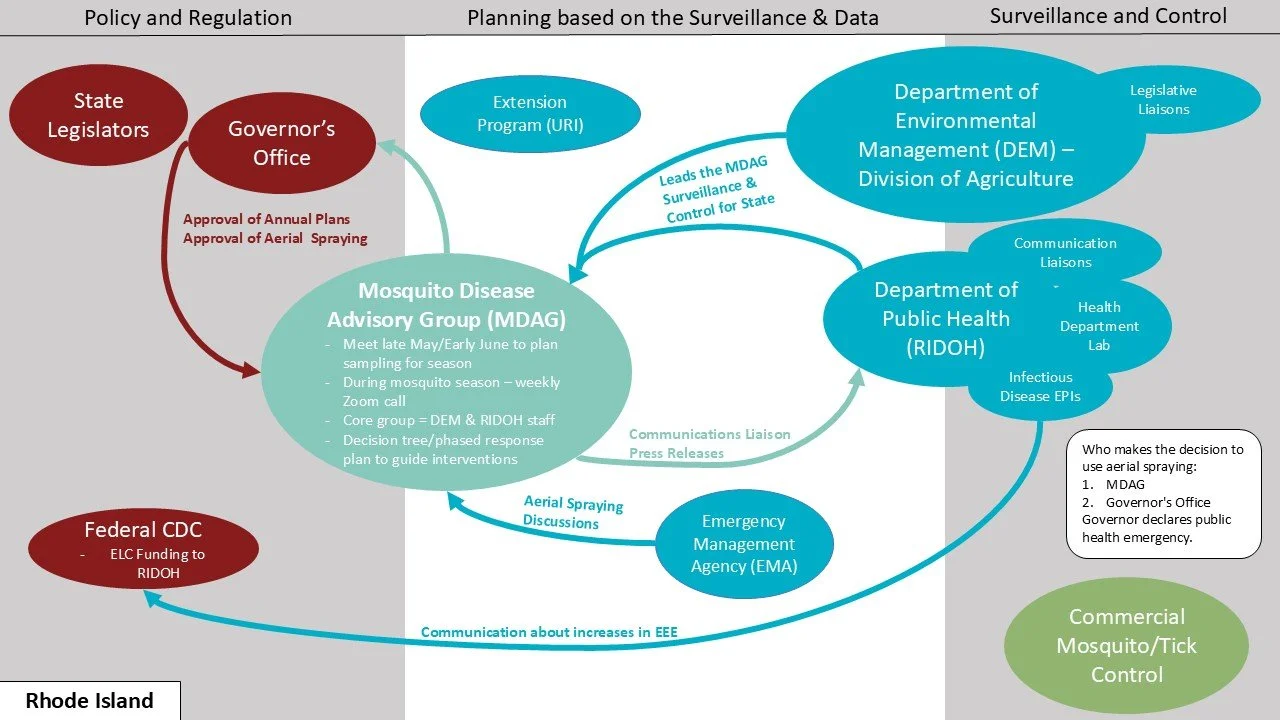
Rhode Island
In Rhode Island, the state’s response to vector control is largely centralized, as there are no local health departments or mosquito boards, so all efforts are coordinated at the state level, primarily between RIDOH and RIDEM. Data-driven decision-making and regular, well-coordinated communication are notable strengths, helping maintain strategic response and outreach even with few staff and limited resources. The burden of vector-borne diseases like Lyme continues to grow, and prevention relies on public education campaigns, creative communication, and federal grants. Funding gaps leave staff with little capacity for expanding services, making community partnerships essential for prevention messaging and driving incremental policy change.